
An underground nuclear test may seem far removed from civil engineering, yet it raises direct engineering questions: How is a geological site selected? How can enormous energy be contained within rock? And how are seismic responses at the surface, in structures and in the environment measured? This article explains the Cannikin test on Amchitka Island, drawing on a video from Smart Design's channel and adding the necessary scientific context.
Where is Amchitka, and why was its location sensitive?
Amchitka is a remote island in Alaska's Aleutian chain, an active volcanic and seismic region along a tectonic boundary. This geology made the propagation of seismic waves through rock scientifically significant, while also raising substantial environmental and geological concerns about a large-scale test.
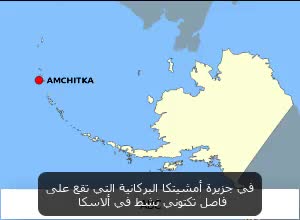
The 1971 Cannikin test
The United States conducted the underground Cannikin test on November 6, 1971. According to the U.S. Department of Energy, its yield was less than 5 megatons and the test took place about 1.79 km below ground. Cannikin was the third and last underground nuclear test on Amchitka, not the last U.S. underground test overall.
An underground test involves much more than burying a device. It requires an integrated containment system: selecting suitable rock, determining adequate depth, preparing the access path, sealing the opening, and installing instruments to monitor conditions before, during and after the event. A failure in any part of this system can produce greater surface effects than anticipated.
How is an underground explosion contained?
The surrounding rock mass acts as a barrier to the released energy, while the depth limits the direct escape of gases, heat and pressure to the surface. Rock quality, joints, faults and groundwater are nonetheless essential factors: they govern how stresses and seismic waves propagate. A sound assessment therefore begins with detailed geological and geotechnical investigations, alongside structural calculations.

Was the explosion an earthquake?
Physically, a nuclear explosion is different from a natural earthquake. An earthquake commonly results from sudden slip along a fault; an explosion releases energy rapidly from a defined point. Instruments nevertheless record ground waves in both cases, so seismic comparisons help describe the scale of the response. The U.S. Geological Survey compared Cannikin's energy to roughly a magnitude 6.9 earthquake. This is an energy-equivalent comparison, not a separate naturally occurring earthquake.
What do monitoring instruments measure?
Monitoring cannot be reduced to a single number for shaking intensity. Engineers and geologists study acceleration, velocity, displacement, duration and frequency because each quantity describes a different aspect of ground and structural response. For example, one area may experience relatively large, slow displacement, while higher acceleration governs the response of a light structural element or sensitive instrument elsewhere.
These measurements are converted into maps and plots that help locate stress concentrations, trace wave paths and compare observed results with geological assumptions and numerical models. This is the scientific value of monitoring: turning a striking visual event into measurable, analyzable data.
Engineering and environmental lessons
- Site selection is both an engineering and environmental decision: The rock type, faults, groundwater and surrounding environment must be understood before any high-energy activity.
- Depth alone is insufficient: Containment also depends on rock-mass quality, sealing details and an ongoing monitoring program.
- Monitoring is part of the design: Sensors and a measurement plan are not afterthoughts; they help validate assumptions and manage risks.
- Clear scientific communication matters: When comparing an event with an earthquake magnitude, the meaning of the comparison must be explained so an explosion is not mistaken for a tectonic earthquake.
- Environmental effects must not be overlooked: The scale of the event led to continued environmental monitoring at Amchitka. Managing environmental risk remains essential in any sensitive project.
Conclusion
Cannikin shows that exceptional energy demands an integrated system: reliable geological data, engineered containment, field measurements and responsible interpretation of results. For engineers, the central lesson is to understand the path of loads or energy through the system before making a safety decision, whether the system is a concrete cantilever, a sensitive facility or a deep rock mass.