
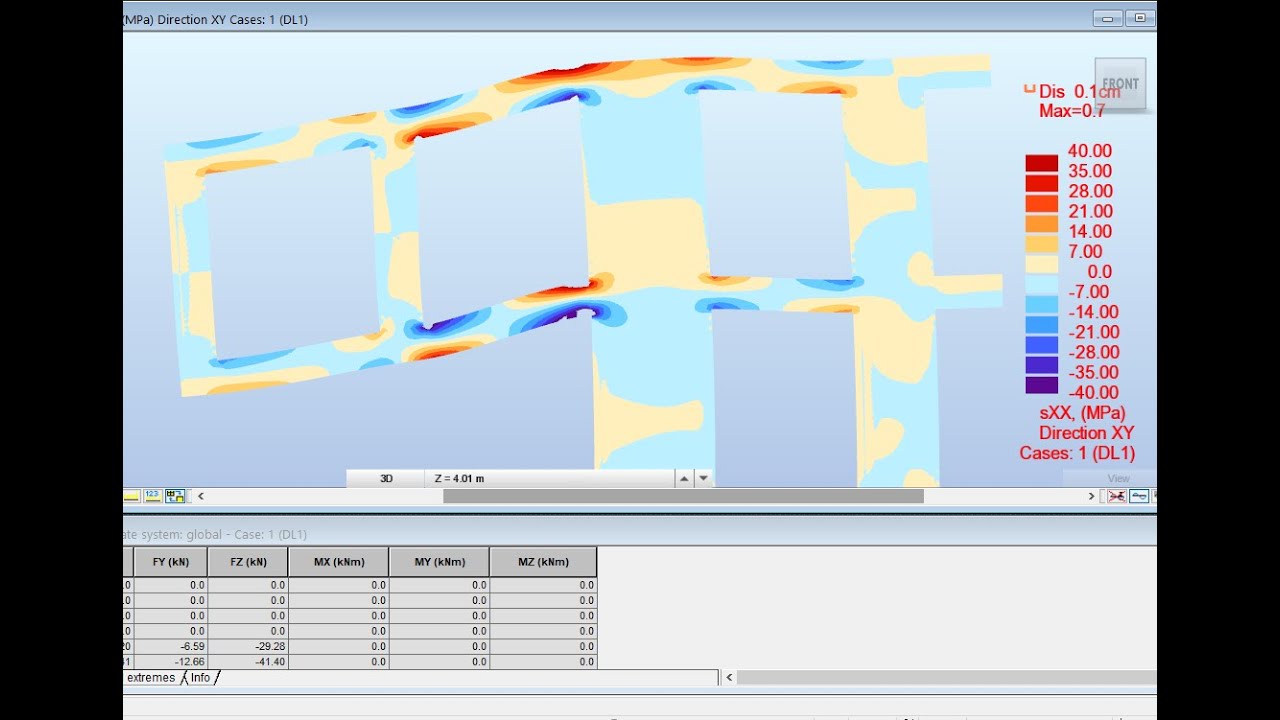
This article follows the construction of the reinforced concrete Vierendeel girder used to support a long cantilever in Lamina Tower. It complements the previously published structural study: the safety of this solution depends not only on sound analysis but also on the sequence of work, reinforcement detailing and continued temporary support until the complete load-carrying system is in place.
The Vierendeel girder concept in a long cantilever
A Vierendeel girder is a deep structural system with top and bottom chords and vertical members, without conventional diagonals. In a long cantilever it behaves as a concrete frame rather than an ordinary beam, transferring bending moments and shear forces between its components. The load path must therefore be clear in the design and accurately reflected in the construction details.
Construction begins with the bottom chord
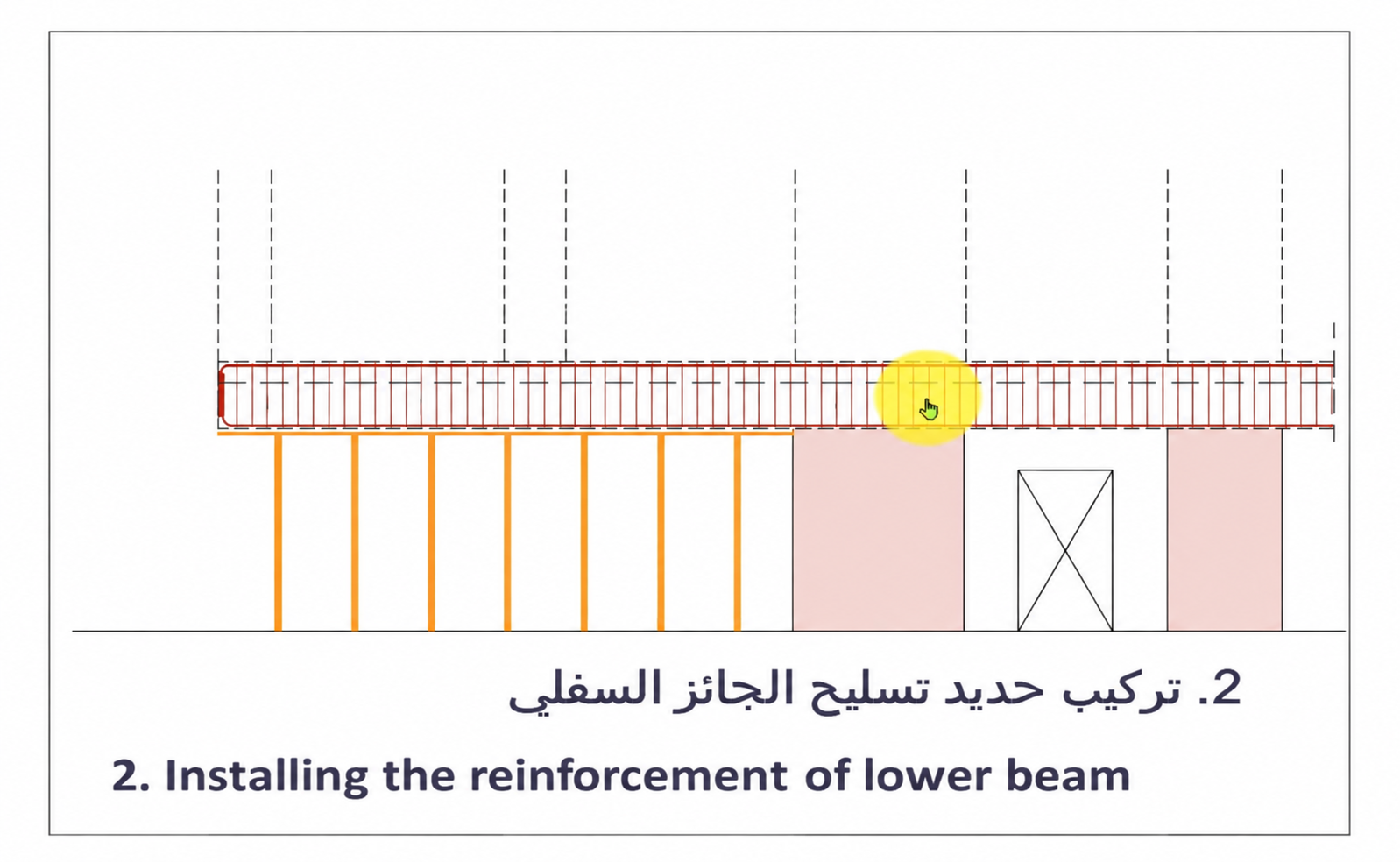
First, the girder's bottom chord reinforcement is installed on the formwork and temporary supports. Levels, concrete cover and stirrup spacing are checked. This is not an independent layer of steel: it forms the base for the vertical members and upper chord that will later work together as one Vierendeel girder.
Column starter bars and the connection between levels
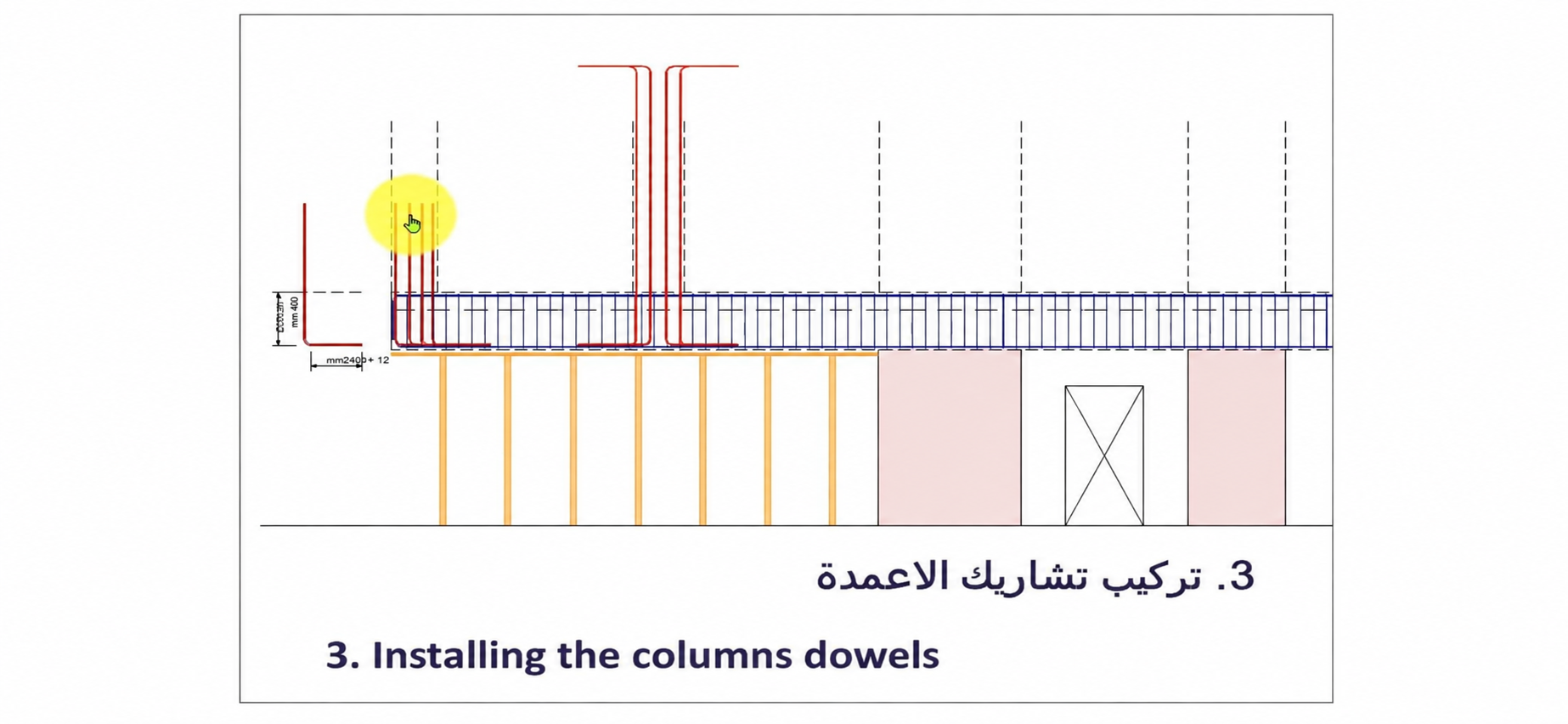
Once the bottom chord is fixed, starter bars for the columns and vertical members are installed at their specified locations. This connection turns separate chords and verticals into a system that can resist moment and shear. The position, alignment and bends of the starter bars must be inspected before the reinforcement is closed or concrete is placed.
Development length: a fundamental requirement
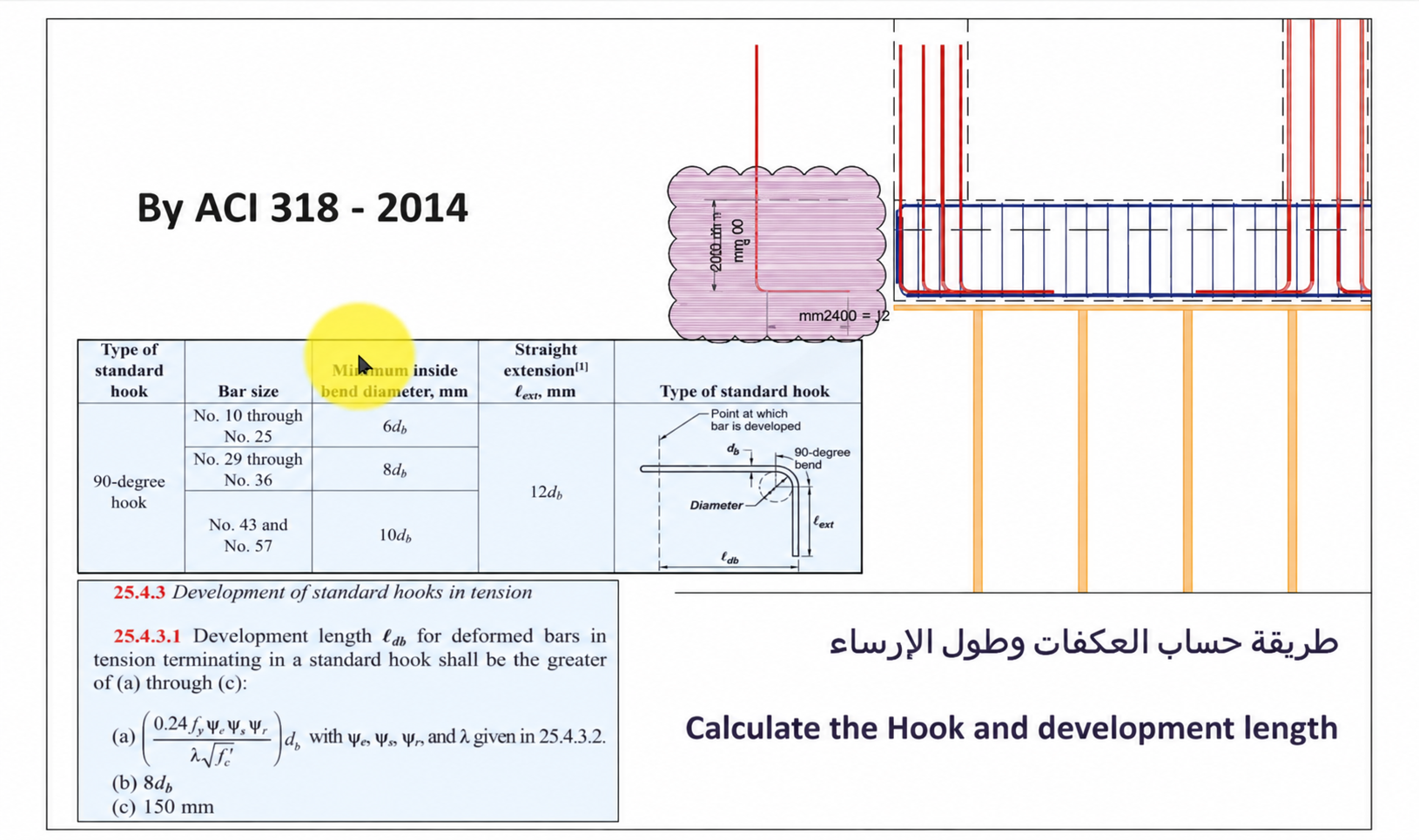
The reinforcing bars in the columns, primary members and horizontal members must achieve the code-required anchorage or development length within the joint regions. The aim is not merely to pass bars through the intersection, but to transfer forces between the two levels and create a rigid connection capable of safely carrying moments, shear and other loads.
The development length is checked against bar diameter, concrete strength, bar location and hook type where required, in accordance with the applicable code and approved drawings. Shortening that length or changing the bar path to ease installation may weaken the joint even if the reinforcement looks acceptable. No site change should therefore be made without the structural designer's review.
Temporary support and the correct time to remove shoring
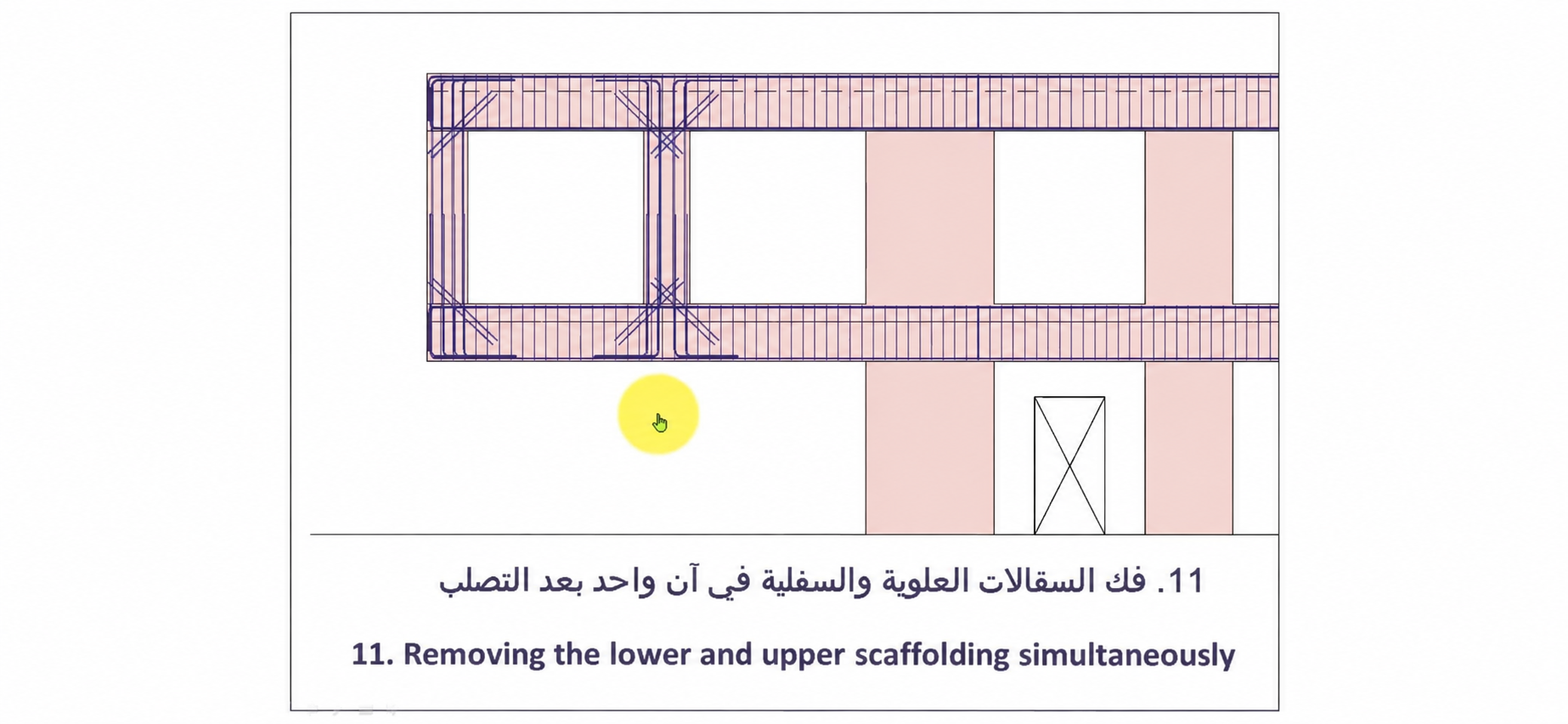
Steel formwork and scaffold-supported shores carry the fresh concrete, reinforcement and construction loads until the concrete reaches its required strength. For this cantilever, the formwork and scaffolding must not be removed after casting the first level alone. They remain in place until the second level above is fully constructed and cast and its concrete reaches the strength specified in the construction plan.
Only then do the two levels act together as the structural unit assumed in the design, allowing temporary supports to be removed safely in the approved sequence. Removing them early can impose stresses and deflections on the cantilever and its joints before the full load path is established.
Concrete placement, curing and quality control
Before casting, the formwork, reinforcement, openings and concrete cover are inspected. The delivery and placement sequence and vibration are controlled to avoid unplanned local loads or displacement of bars. After casting, curing, sampling, verification of concrete strength, and monitoring levels and deflections help establish that the as-built condition matches the approved design.
Conclusion
Constructing a long-cantilever Vierendeel girder requires a coordinated system: the right assembly sequence, carefully detailed starter bars and joints, the required development lengths, and temporary support retained until both levels are complete. Together, these measures turn the analytical concept into an element that can be built safely and carry its intended loads.
See also: Structural design of a long concrete cantilever in Lamina Tower using a Vierendeel girder.