
Engineering case study | Marine construction
The project involved building offshore villas at Rixos Resort in King Abdullah Economic City. Their steel structures sit on steel platforms supported by piles driven into the seabed. Design and construction took place in a sensitive marine setting, where access restrictions and environmental requirements had to shape the structural solution from the outset.
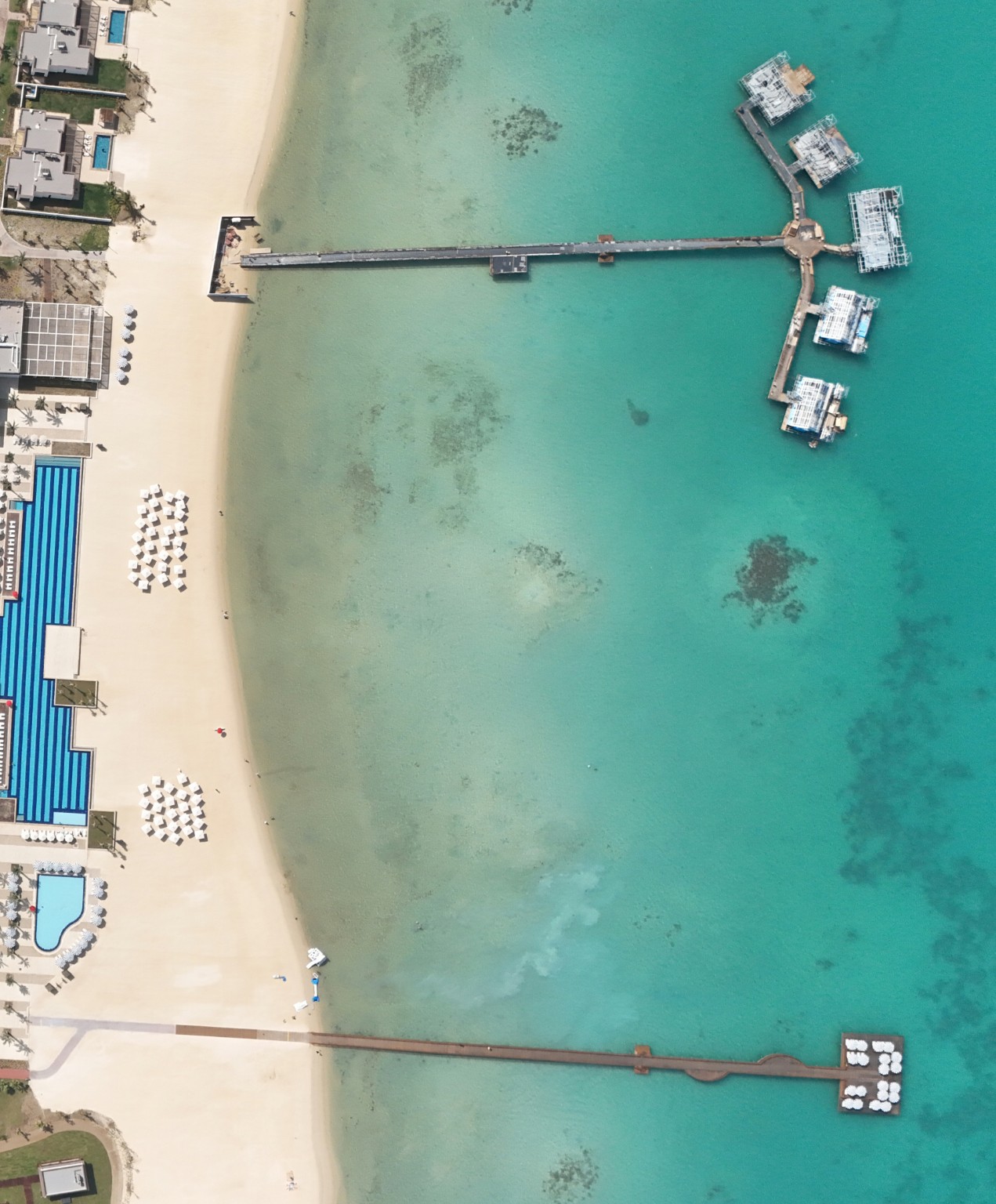
Project concept
The structural scheme used steel frames and platforms with materials suited to the marine environment, including galvanized components, followed by timber external finishes. This avoided pouring concrete or placing fill in the sea and limited disturbance of the seabed to the piling and installation work needed.
On a project like this, structural design cannot be separated from construction methodology. Seabed conditions, water depth, equipment access and corrosion protection all affect the foundation details and the sequence of work.
Key challenges
- Water depth at the work area reached approximately 4 m.
- A coral reef separated the work area from the open sea, preventing a conventional heavy barge from entering.
- The marine environment had to be protected, with no concrete casting or placement of fill in the sea.
- Coral rock, rather than sandy soil, formed the seabed and made direct pile driving difficult.
The objective was therefore not only to achieve adequate foundation capacity, but also to install the system in a way that respected the site and avoided unnecessary disturbance of the coral reef and surrounding seabed.
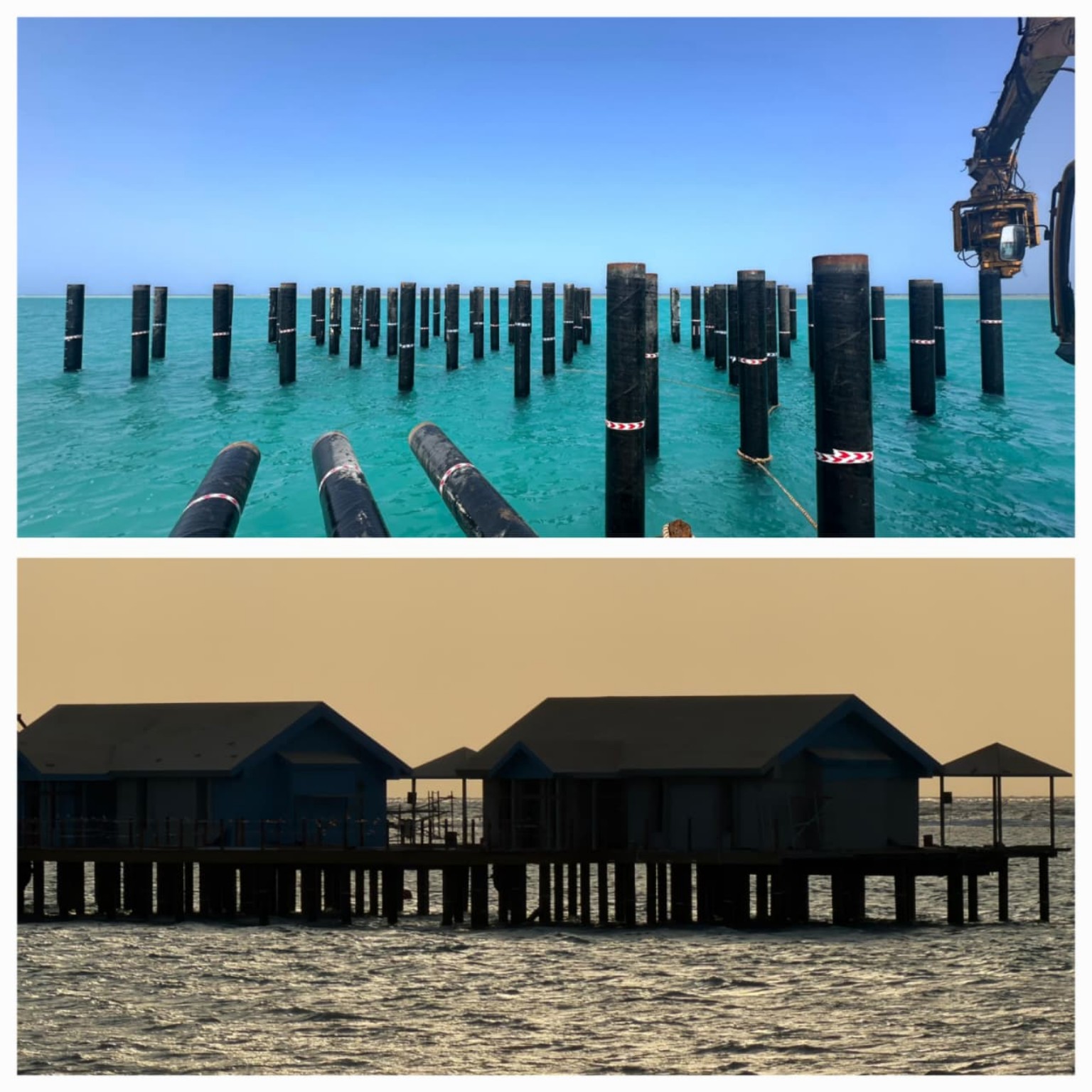
Pile protection and the water-depth challenge
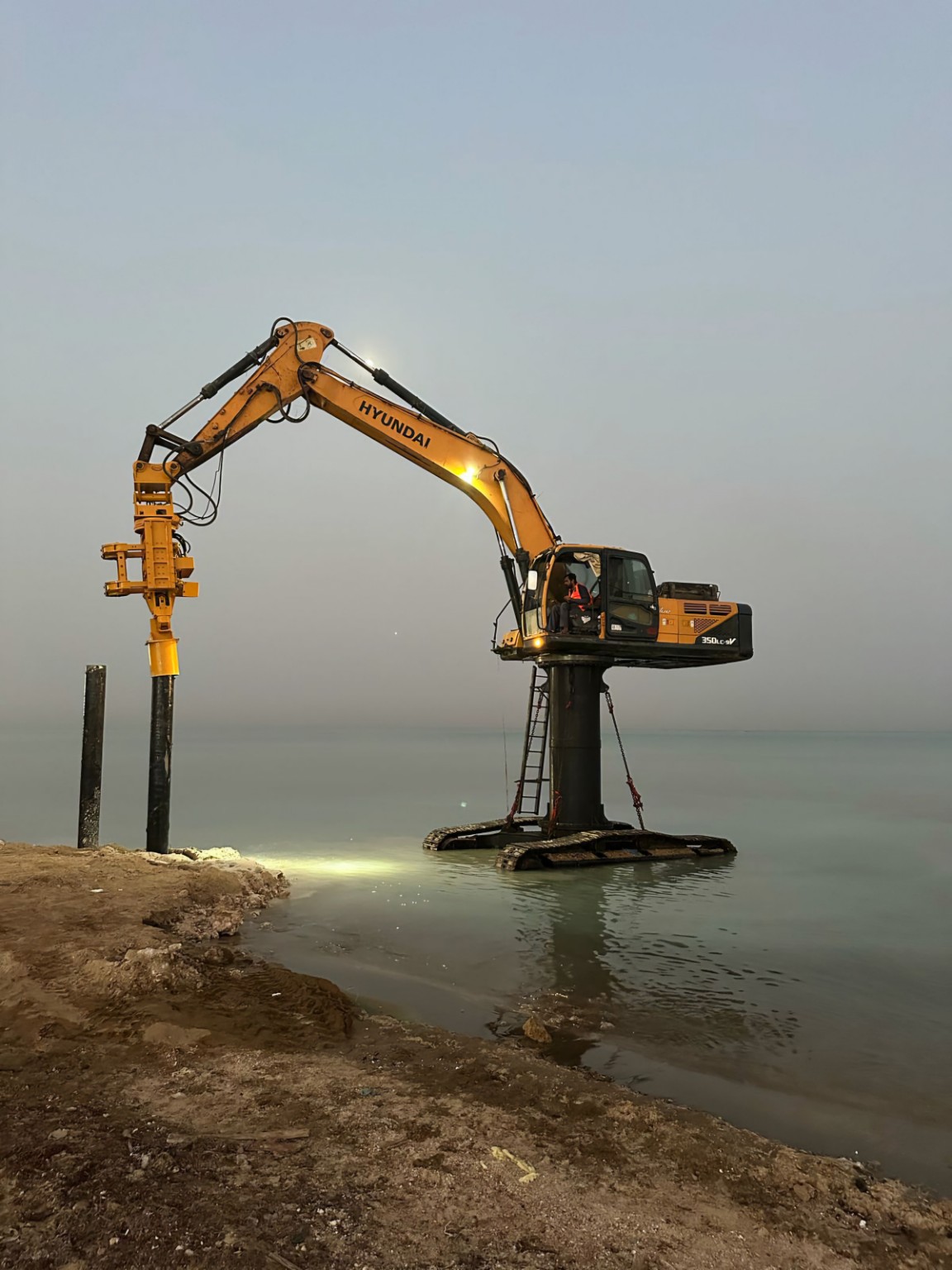
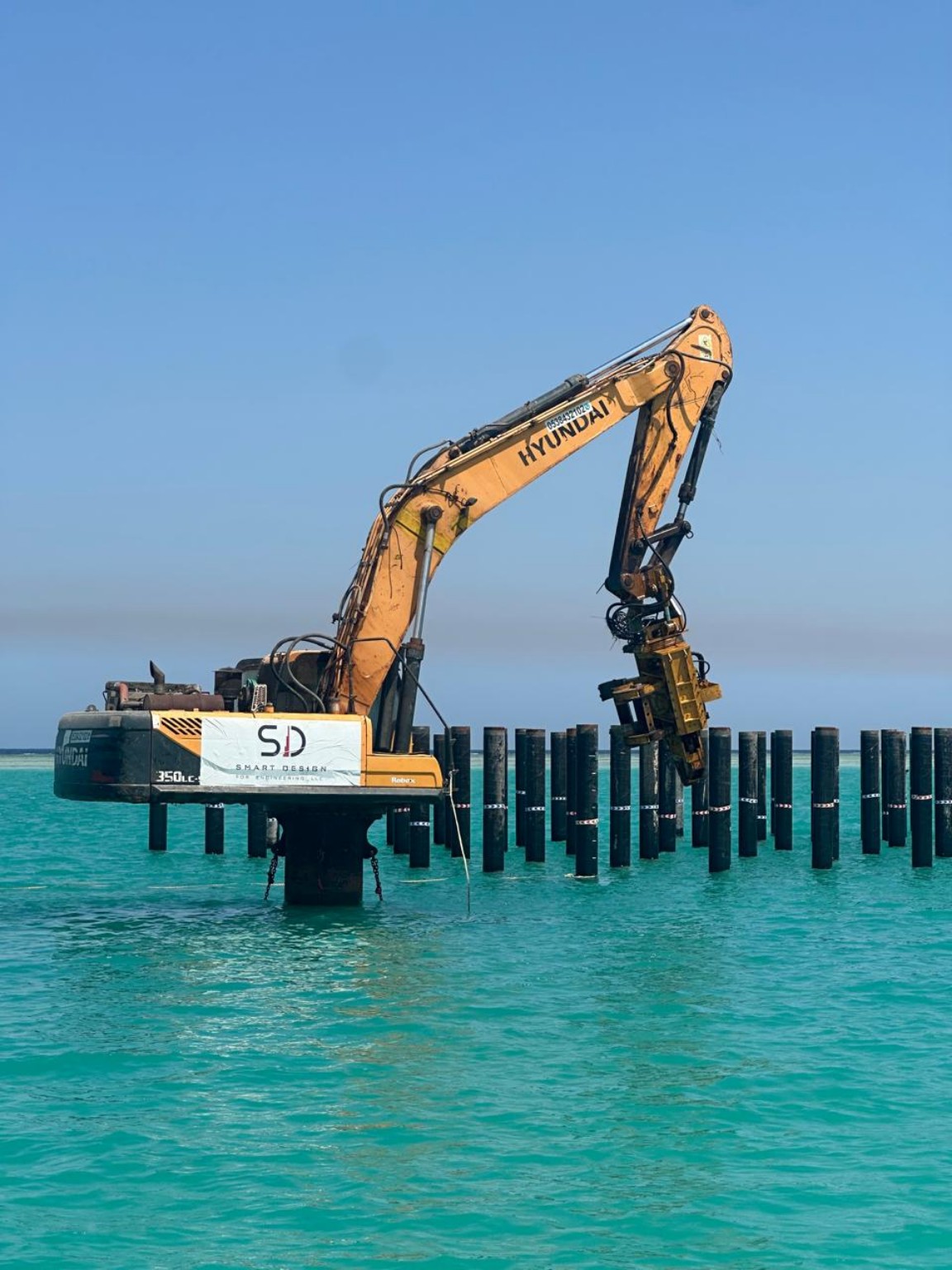
The steel piles received a three-layer polyethylene coating to isolate them from the marine environment and reduce exposure to corrosion. To work at this water depth, a pile-driving machine was adapted to operate in the sea, with its driving cabin raised on a designed 4 m steel extension.
Raising the driving assembly was more than an operational adjustment. The steel extension was designed to provide the required height while maintaining equipment stability and an appropriate center of gravity during travel and driving. This enabled work in an area inaccessible to a heavy barge.
Working through coral rock
To address the coral-rock layer, pre-drilling was carried out pre-drilling at the pile locations. This prepared a controlled path for driving the piles at the specified positions and elevations, rather than attempting to drive them directly through the hard rock.
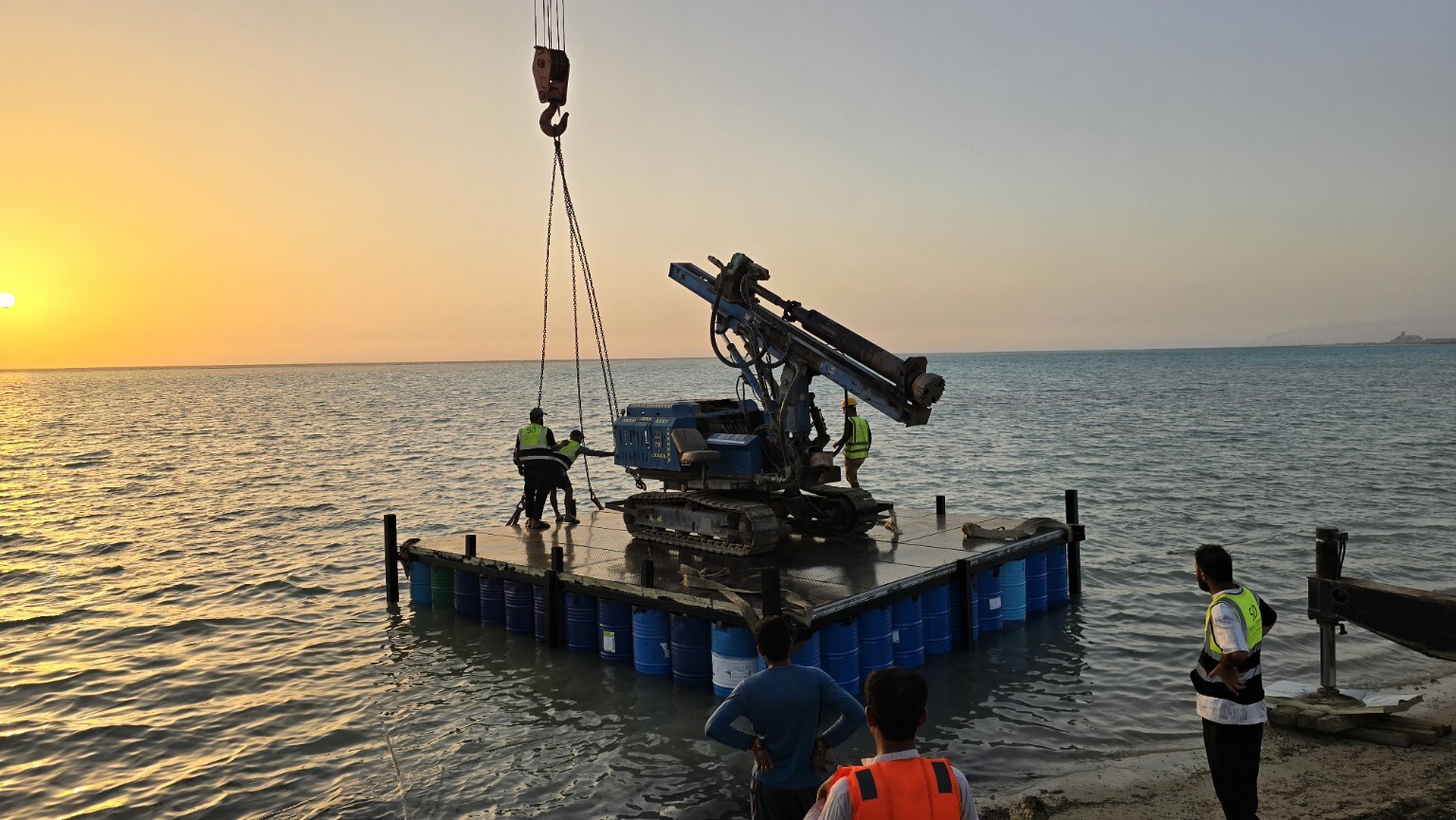
A rig was prepared for pre-drilling and placed on a steel barge fabricated onshore. The approximately 10-tonne rig then drilled at the pile locations. Fabricating the barge made it possible to tailor its dimensions to the restricted access, instead of relying on larger marine equipment that could not pass the reef.
Installing the platforms and steel frames
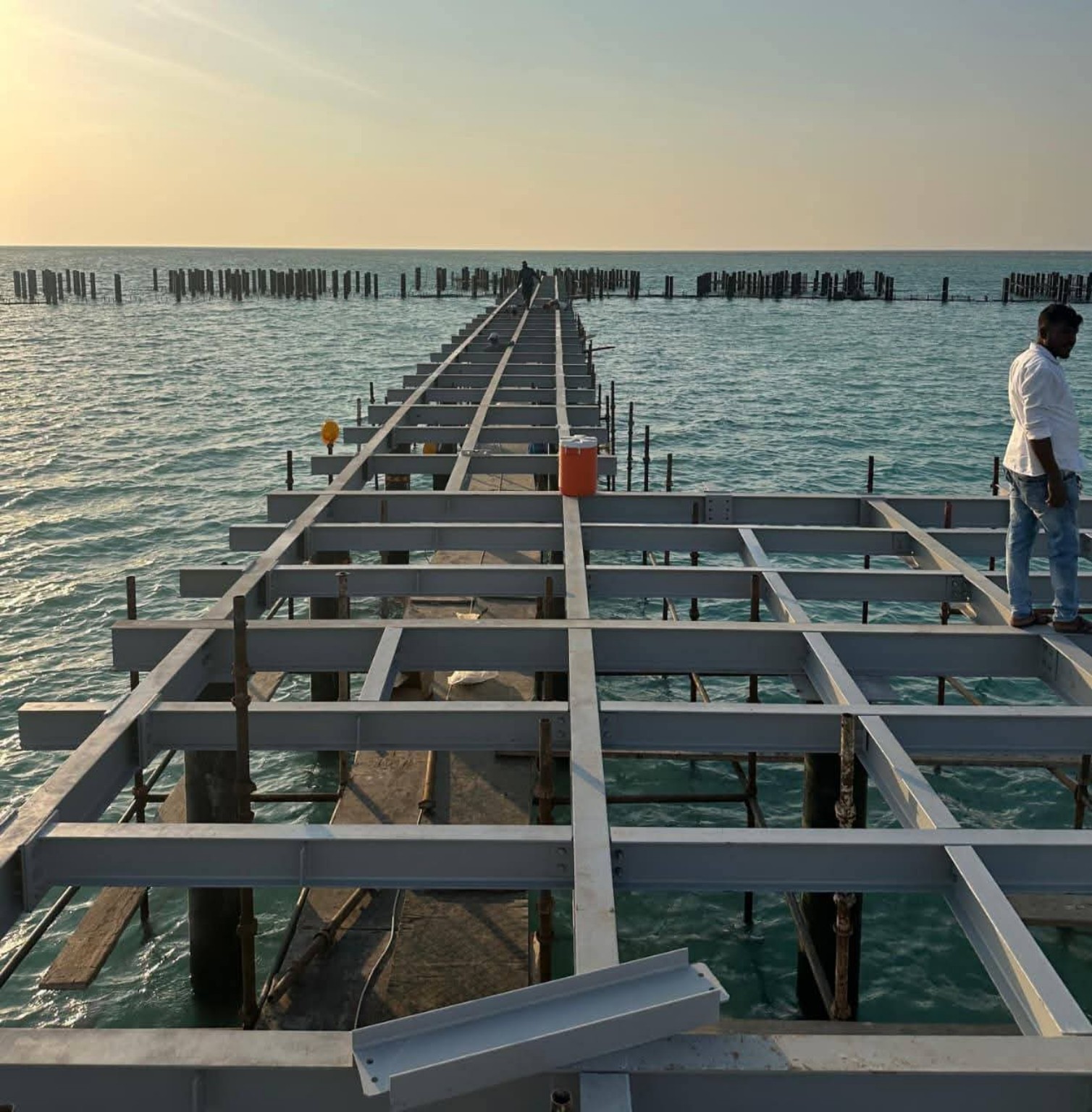
Once the piles were in place, steel platforms and frames were installed using work rafts and steel scaffolding supported on the seabed and extending above the water level. This allowed teams to install the components safely and precisely without creating filled access routes or temporary concrete platforms in the sea.
The sequence was pre-drilling, pile driving, platform installation and finally steel frame erection. It reduced clashes between activities, enabled level control and allowed members to be connected progressively before the villa components were installed.
Outcome
The offshore villas were constructed on an integrated steel system designed around the water depth, coral reef and coral-rock seabed. The solution enabled foundations and structures to be built without placing concrete or fill in the project area, limiting disturbance to the marine environment to the necessary pile and installation works.
Scope of work
Design and installation of piles, platforms and steel structures for the offshore villas, plus adaptation of construction methods and supporting equipment to site conditions and environmental requirements.